
HDFC was the top gainer in the Sensex pack, climbing nearly 4 per cent, followed by PowerGrid, Sun Pharma, Tata Steel, Tech Mahindra and Bajaj Finserv. NSE Nifty surged 234.75 points to 17,401.65.

The Reserve Bank's growth projection for next financial year is lower than 8-8.5 per cent projected by the finance ministry in the recent Economic Survey which was tabled in Parliament on January 31. Unveiling the bi-monthly policy, RBI governor Shaktikanta Das said, "Recovery in domestic economic activity is yet to be broad-based, as private consumption and contact-intensive services remain below pre-pandemic levels."

Softening the demonetisation blow, the Budget for 2017-18 on Wednesday halved the tax to 5 per cent on incomes up to Rs 500,000 but proposed a new surcharge of 10 per cent on incomes between Rs 50 lakh and Rs 1 crore and raised duties on cigarettes and pan masala while stepping up allocations for infrastructure, rural, agriculture and social sectors.
Most brokerages are betting that the new government will shift to a policy focussing on boosting rural incomes and consumption since that has clearly been a pain point.

Gross collection of tax on corporate and individual earnings jumped nearly 24 per cent so far in the current fiscal year that started on April 1, the tax department said on Sunday. The gross collection of taxes on corporate earnings rose 16.74 per cent during April 1 to October 8, while personal income tax collection jumped 32.30 per cent, the tax department said in a statement. Direct tax collection came at Rs 8.98 lakh crore between April 1 to October 8, 2022, 23.8 per cent higher than the gross collection in the corresponding period a year ago.
'The Budget targets are achievable, but they require continued discipline and that the government sticks with the efforts to cut red tape and make business in India more efficient.'

'Interim Budget has ignited the entrepreneurial spirit.'
Crosses Budget Estimate by 5.5%, govt expected it to be 4.6% of GDP for current financial year

The tax collections are down by Rs 60,000 crore (Rs 600 billion) over budget estimates for 2008-09, Pranab Mukherjee said.

In this year's budget, Finance Minister Nirmala Sitharaman hiked tax on petrol and diesel, raised import duty on gold, levied additional surcharge on super rich and brought a tax on high value cash withdrawals as she sought to spur growth with reduction in corporate tax and sops to housing sector, startups and electric vehicles.

'Nirmalaji's Budget announcements have long-term implications and are not backed by enough money when the short-term outlook looks bleak,' notes T N C Rajagopalan.

Pakistan's outgoing government has acknowledged that it provided grants of Rs 687 billion to the powerful military for security-related spending that were in addition to the annual defence budgets.

Lower revenue collection puts upward pressure on government borrowing, ensuring that it deviates from the glided path of debt reduction

As India emerges from the COVID-19 crisis, the ninth budget under the Modi government, including an interim one, is widely expected to focus on boosting spending on job creation and rural development, generous allocations for development schemes, putting more money in the hands of the average taxpayer and easing rules to attract foreign investments.

This e-series funding round also makes OYO the most valued hospitality company in the country, ahead of the Tata group's Indian Hotels Company, which owns the Taj brand of hotels, and EIH, which owns the Oberoi brand of hotels.

While the fiscal year has just begun, any windfall surplus will be welcomed by the government as it bids to meet the fiscal deficit target of 5.9 per cent of GDP, amidst lack of clarity on exactly to what extent will recession in the West impact India's trade and tax collections.

Revenue buoyancy of GST will be key to improve the resource position of both central and state governments.

The increase in India's military spending was "mainly a result of growing personnel and operations costs" which made up almost 80 percent of the total military budget in 2023, the SIPRI report claimed.

The capital outlay for the three services, for modernisation, stood at Rs 78,586.68 crore

'Personal income tax is growing by 27 per cent and most refunds have already been issued.'
Budget-makers in North Block are looking to maintain this fiscal status quo, in spite of tax revenues nowhere close to where the government wants and in spite of possible higher expenditure commitments.

Govt may further hike excise on petrol, diesel before Budget.
The fiscal deficit touched 61.2 per cent of full year Budget Estimates or over Rs 3.24 lakh crore in end July.
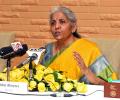
Macroeconomic management is usually a lot more comfortable with lower fiscal deficits. The sooner we get there, the better for the economy, says former Chief Economic Adviser to the Government of India Shankar Acharya.

Nirmala Sitharaman has designed the revenue mix in such a way that while Centre's share in taxes would grow a massive 25 per cent, states' share would grow a dismal 6 per cent.

Finance Minister Pranab Mukherjee was saddled with a number of handicaps when he presented the Union Budget 2012-13 on Friday morning.

Collection will have to rise by 30 per cent in the remaining period of the financial year to achieve the Budget estimate.

The major beneficiaries have been the ministries of roads and highways, railways and power

Country's fiscal deficit touched Rs 516,390 crore or 95.2 per cent of the annual target during April-December, the Controller General of Accounts said.
Finance Minister P Chidambaram presented the Interim Budget for 2014-15 on Monday.

Budget was a mild disappointment. Yet, the bull run continues.
Enthused by over 36 per cent increase in direct tax collections during 2007-08, Finance Minister P Chidambaram on Monday asked the department to aim for higher collections this fiscal than the Rs 3,65,000 crore (Rs 3,650 billion) estimated in the Budget for 2008-09.

Excise duties on mobile phones to be 1% without CENVAT credit or 6% with CENVAT credit. This provision will have marginal impact on telcos.

Australia's state of Victoria has withdrawn as host of the 2026 Commonwealth Games, placing the future of the quadrennial multi-sport event in doubt
During April-October 20 period, the tax department has made refunds to the tune of Rs 80,850 crore.

The government's food subsidy in the ongoing fiscal year is expected to be a little less than Rs 4 trillion.

Going by available indications from North Block, Mr Mukherjee may like to do a Chidambaram when he presents the Revised Estimates on February 27, 2010

A ramp-up in COVID-19 vaccination, healthy advance estimates of kharif (summer) crop and faster government spending were the factors which led to the revision, the agency said in a statement. It can be noted that after the 7.3 per cent contraction in 2020-21, there were expectations of a higher growth number in 2021-22.

Moody's Ratings on Tuesday said India's growing water shortage can disrupt farm and industry sectors and is detrimental to the credit health of the sovereign as rising food inflation and decline in income may spark social unrest. It said decreases in water supply can disrupt agricultural production and industrial operations, resulting in inflation in food prices and hence can be detrimental to credit health of sectors that heavily consume water, such as coal power generators and steel-makers.

'The private sector believes that some enablers in labour-intensive sectors like apparel, toys, tourism, and media retail, can unlock a lot of jobs.'
